
Plunderbound runs on its own site, in its own tab.
- A desktop browser, with a mouse and keyboard.
- The first visit downloads about 36 MB. Then click to begin; the sound starts then.
- Saves are kept in that browser, on that device.
- A downloadable release is coming soon. The browser version is an early look at a bigger game.
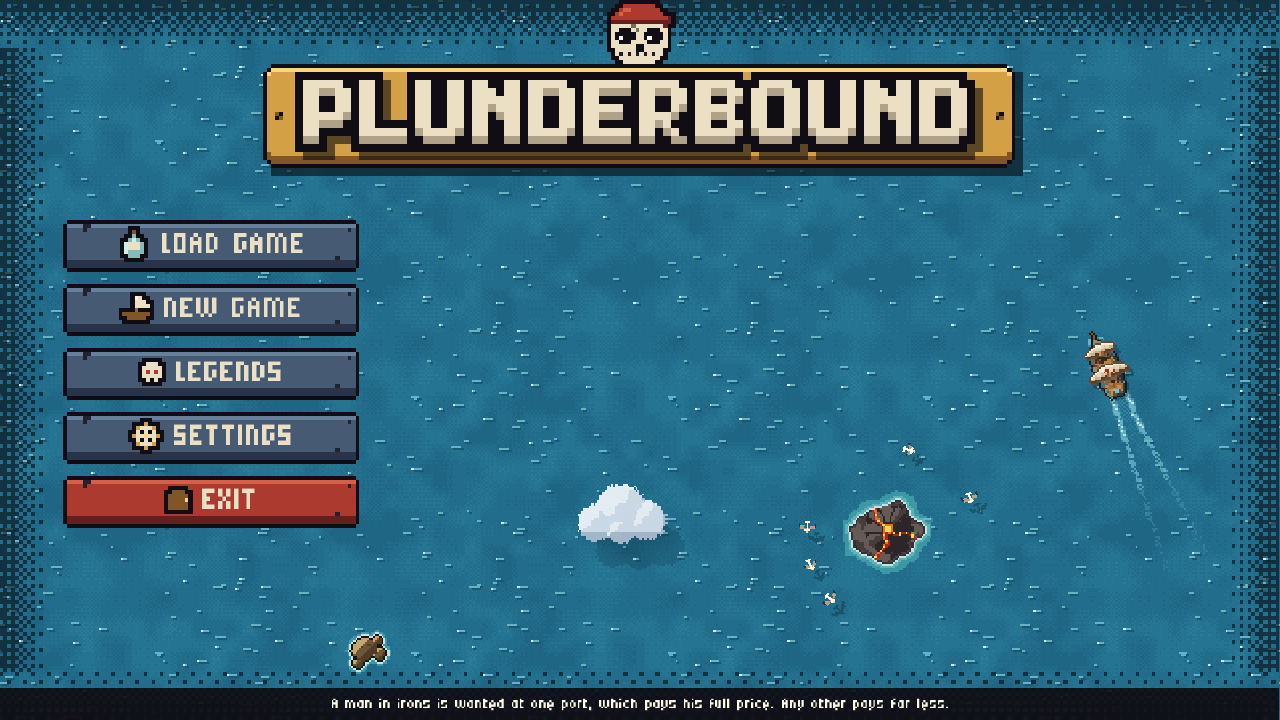
Plunderbound is a pirate game seen from above, in pixel art. You captain a crew, not a lone hero, across a sea that gets more dangerous the farther you sail, and the story is the name you make out there. It is still being made: an early version plays in a desktop browser now, and a downloadable release is coming soon.
Your name. Two things follow you around: how widely you are known, and what you are known for, from cruel to merciful. Word only spreads when somebody lives to tell it, so sinking a ship with every hand aboard earns you almost no name at all. A feared name makes ships surrender at a hail; a name for keeping your word makes them surrender knowing they will live. A cruel one brings out the bounty hunters.
At sea. Sailing and ship fights happen in real time: round, chain and grape shot, wind that comes and goes, and an iron ram. Board an enemy and the fight moves to the deck, turn by turn.
Your crew. Fifty-one unique crewmates to find, each with a story and words of their own. They make friends and grudges, learn new moves as they level up, and need food, care for their wounds and good morale. Run the ship badly and they grumble, then mutiny.
Ashore and beyond. Explore islands and wrecks, trade each region’s goods in port, fit out your ship at the shipwright, storm forts, and hunt the Crown’s treasure ship. Old stories lead across six regions, from the Known Waters to the Maw.
Starts and ends. Choose how your company starts. No Quarter gives you one life and no second chances. The Legends remember what every finished voyage left behind.
Under the hood. Made in Ruby with DragonRuby, a small game engine. The browser version saves in that browser, on that device. Bugs can be reported from inside the game, and players can choose to share anonymous numbers about their voyages to help with balance.
Screens
Log
What changed in Plunderbound, newest first. Every entry · RSS
- gamesBug reports sent from inside the game now reach the developer, and players can choose to share anonymous voyage stats to help with balance.
- Report a bug from inside the game: REPORT A BUG on the pause menu or the Settings page, or F8, sends a short report straight to the developer, with the voyage’s save attached if ticked.
- Share how voyages go, if wanted: asked once at the first launch. Only the numbers are sent (days, counts, how a voyage ended), never a ship’s or crewmate’s name or anything typed. It can be changed any time on the Settings page, under SAVING.
- Clearer words: one name for each thing across the whole game (Esc, round shot, wounds, the sawbones), and every line read again.
- gamesThe biggest update yet: morale and mutiny, fifty-one unique crewmates to find, ship fittings, forts to storm and a Crown treasure ship to hunt.
- A crew with a say: morale rises and falls with how the ship is run, and a sore crew grumbles, signs a round robin and can rise in mutiny. Six posts aboard and a captain chosen from the hands, and articles the company signs and strikes in port, each rule a gift and a cost.
- Fifty-one unique crewmates, each with a story, a want and words of their own, found in taverns, on wild islands, on the quays and behind bars. Every hand now talks now and then, makes friends and grudges, and is named for where they come from.
- Hands who grow: a choice of new move at every level, a passive for every class, and trainers in port (a fencing yard, a gunnery school, a fighting pit, a cookhouse) who teach up to level 4.
- Ships: sixteen fittings and a figurehead at the shipwright, an iron ram, a second ship bought outright at the yard, wind that comes in spells (calms included), and a full hold that sails heavier.
- A name that travels: nine tempers from Gracious to Black-hearted. A cruel name makes crews strike or run sooner and brings out the bounty hunters, who now hunt the other known pirates too.
- Things met at sea: castaways on a raft, a bottle on the swell, ships in distress, derelicts with nobody aboard, rumours that lead to real hoards, sandbanks that can be landed on only at low tide, and a ship crewed by the drowned.
- Big prizes: the admiral’s flagship on her round of the forts, the Crown’s treasure ship and her escort, forts to bombard and storm, and the company’s own hands broken out from under the gallows at Port Sovereign.
- Fights: the enemy taunts and the crew answers in speech bubbles, enemy gunners lead a turning ship, either side can run or strike its colours, and every fighter in a boarding weighs each move.
- Trade and treasure: goods of each region’s own, gems and treasure worth more than gold, and a TRADE page in the log with every price seen.
- The log: every story begun marked on the chart and laid out as a board of pinned cards, a page for every island and person met, a search of the whole log, and a day ashore told on one page and kept to read again.
- Smoother: a loading screen about four times quicker, fewer stutters late in a voyage, and a first download less than half the size.
- hubThe entry is rewritten around your crew and the name you make, its download size is measured from the live game, and a downloadable release is coming soon.
- gamesPlunderbound plays in the browser at plunderbound.pages.dev; the entry moved to web games, with the skull and the menu over the sea drawn pixel for pixel.
- gamesA top-down pirate roguelite in DragonRuby, listed while it is still in progress.